
- Home
- Guide to Desert Safari
- Authentic Bedouin Experience in Dubai: Tradition vs Tourism
- Guide to Desert Safari
- On 24.08.2026
- Kashish Sharma
- Tags Desert Safari Dubai
Authentic Bedouin Experience in Dubai: Tradition vs Tourism
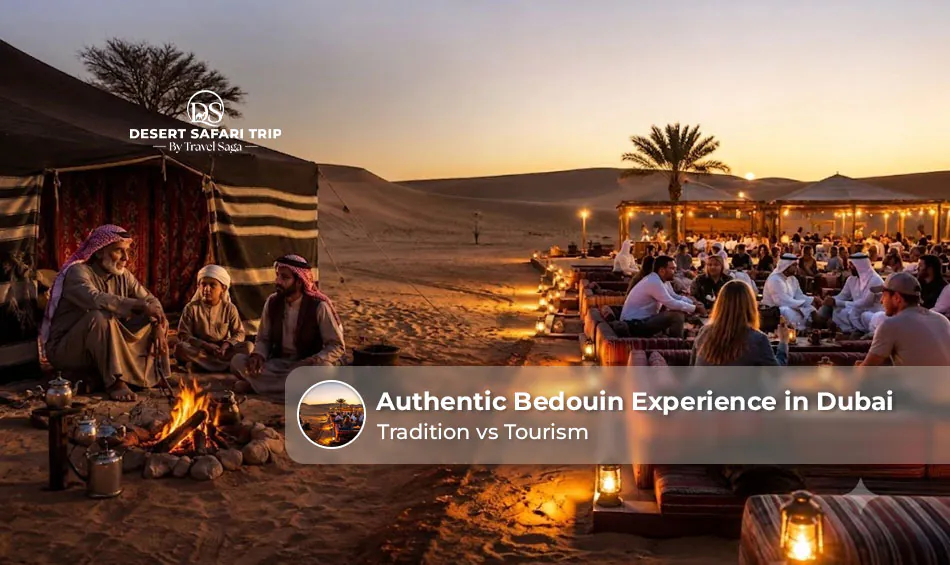
Dubai is famous for quite a few things, from skyscrapers, luxury hotels, and world-record attractions. But long before any of that existed, this land belonged to the Bedouin desert communities who survived and thrived in one of the harshest environments on earth. Today, a Bedouin experience in Dubai gives visitors a chance to step away from the city and experience a quieter world that existed even before things were that convenient. But here is the question most travellers quietly wonder about: how much of what you experience at a desert camp is genuinely rooted in Bedouin culture and how much has been shaped by modern tourism? This guide wants to tell you a different perspective without any bias and also covers everything that you might want to know, from Bedouin Experience Dubai to What to expect from a Bedouin experience in Dubai?
What does a Bedouin Experience in Dubai look like?
The Bedouin were nomadic Arab communities who lived across the Arabian Peninsula for thousands of years. They moved with the seasons, following water and grazing land across vast stretches of desert. And in doing so, they developed a culture built on three things above all else: hospitality, resilience, and deep knowledge of the natural world. Hospitality was not just a courtesy for the Bedouin. It was a survival code. A traveller arriving at a Bedouin camp would be welcomed, fed, and sheltered regardless of who they were. To turn someone away in the desert was considered one of the worst things a person could do.
Desert knowledge was equally vital. Reading weather patterns, navigating by stars, understanding which plants held water, training falcons to hunt. They were life skills passed down through generations. One important thing to understand from the start: today’s desert camps are not identical to how the Bedouin actually lived. They are not historical recreations. They are cultural experiences designed to introduce visitors to Bedouin traditions in a comfortable, accessible format. Read combine desert safari with other attractions if you are confused about if you can combine several experiences.
What to Expect From a Bedouin Experience in Dubai?
If you want to experience Falconry specially, then you can explore our heritage falconry and nature safari. Here’s what you can expect from a Bedouin Experience Dubai:
Arriving at a Traditional-Style Desert Camp
Most camps are located in the desert outside Dubai, typically around 45 minutes to an hour from the city. Camp designs typically use low, open-sided tents with traditional Arabic styling, carpets, cushioned floor seating, lanterns, and canopies overhead. The layout is intentional.
Welcome Drinks & Traditional Hospitality
Within minutes of arriving, you will likely be offered Arabic coffee and dates. It is one of the most culturally significant gestures in Emirati and Bedouin tradition. Arabic coffee, called qahwa, is lightly spiced with cardamom and saffron. It is served in small handleless cups, poured from a long-spouted dallah pot. Dates accompany it as a natural sweetener and a symbol of generosity. Accepting this offering with your right hand and holding the cup when it is refilled are small gestures that connect you directly to a centuries-old tradition of desert hospitality. This is one of the moments where the cultural authenticity is most genuine.
Traditional Food and Dining
Food at a Bedouin-inspired camp typically includes slow-cooked lamb or chicken, rice dishes flavoured with warming spices, fresh bread, hummus, and mezze spreads. These reflect real Emirati and Bedouin culinary traditions: food that was practical, nourishing, and designed to be shared. Communal dining is part of the experience. Eating together, sharing dishes, and taking your time shows the Bedouin approach to meals as a social and cultural act, not just a function.
Music and Cultural Demonstrations
Many authentic Bedouin camp Dubai experiences include cultural performances, traditional music played on instruments like the oud and rebaba, poetry in Arabic, or storytelling that draws on desert folklore and Emirati history. Some camps include demonstrations of traditional crafts: weaving, pottery, or the art of making traditional garments.
Note: If you want to experience beyond the Falcon & Bedouin culture, then you can book our al marmoom oasis camp with bedouin dinner.
Bedouin Tradition vs Modern Dubai Tourism
Here is the comparison for authentic Bedouin camp Dubai:
What Comes From Traditional Bedouin Culture?
Several core elements of the Bedouin culture safari experience Dubai visitors encounter today are directly connected to real historical practice:
- Hospitality is the most genuine thread running through every good camp experience. The welcome, the coffee, the dates, the unhurried pace these are not theatre.
- Falconry is another deeply authentic element. Falconry was a hunting practice the Bedouin relied on for food and survival. Today it is a UNESCO-listed Intangible Cultural Heritage.
- Traditional food connects to real Bedouin culinary history. Slow cooking, spiced rice, communal eating, dates, and coffee these are cultural continuities.
- Oral storytelling was how Bedouin communities preserved history, values, and identity across generations.
Enquire Now Authentic Bedouin Experience
What Has Been Adapted for Tourists?
Modern camps offer comfortable seating instead of basic floor mats. Structured programs replace the organic flow of traditional desert life. Guests arrive by air-conditioned 4×4 vehicles rather than camel. Photography stations, stage performances, and buffet dining are additions designed for contemporary visitors.
None of this automatically makes the experience inauthentic. The best camps do this well. They are clear about what they are offering: a window into Bedouin heritage, not a historical recreation, and they treat that heritage with genuine care.
Activities at a Bedouin Camp You Cannot Experience Anywhere Else
A well-run Bedouin experience in Dubai can include:
- Falconry demonstrations: watching trained falcons perform and learning about their role in Bedouin history is genuinely unlike anything else.
- Arabic coffee and date ceremony: participating in this properly, with context from a knowledgeable host, is a simple but meaningful cultural moment.
- Camel experiences: camels were the Bedouin’s most essential companions. Learning about their role and spending time near them adds a real layer of understanding.
- Traditional Emirati food: eating slow-cooked dishes in a desert camp setting is a different experience from a restaurant.
- Cultural storytelling and music: hearing Arabic poetry or live oud music under open desert skies at night is something most visitors remember long after they leave.
- Stargazing: the Bedouin navigated by stars. Away from Dubai’s city lights, the desert sky is extraordinary. Many camps now include guided stargazing as part of the experience.
- Henna and traditional crafts: hands-on cultural engagement that connects visitors to Bedouin artistic traditions.
- Desert wildlife interpretation: understanding the plants, animals, and landscape of the desert the way the Bedouin did adds genuine depth to the visit.
Is a Bedouin Experience Worth Adding to Your Dubai Trip?
Yes, for most travellers, genuinely yes. If you want a more luxurious experience and might interested to ride in Land Rover Defender, then you can explore our royal falconry training nature safari
- If you are a first-time visitor to Dubai, a Bedouin camp experience gives you something the city’s hotels and malls cannot: a connection to what this place was before the towers went up.
- If you are a culture-focused traveller, choose a camp that prioritises storytelling, falconry, and cultural demonstration over entertainment. Ask operators directly what the cultural content includes.
- If you are travelling with family, the combination of food, falconry, camel encounters, and stargazing works well across different ages.
- If you are a repeat Dubai visitor who has already done the standard desert safari, look for a more specialist cultural experience, smaller group sizes, more guided cultural content, and less emphasis on performance entertainment.
Conclusion
The Bedouin experience in Dubai sits right at the crossroads of the old world and the new. And that is exactly what makes it so fascinating. If you want something that goes deeper than a photo opportunity, it is worth seeking out experiences that are led by people with a genuine connection to this culture.
Beyond the standard desert safari package; a real Bedouin tent, drinking cardamom coffee, watching a falcon return to its handler’s wrist as the sun drops behind the dunes, you will understand why this culture has survived for thousands of years. If you want to book the package, you can always reach out to us at Dubaidesertsafaritrip.com.
Frequently Asked Questions: Bedouin Experience in Dubai
A Bedouin experience in Dubai is a cultural visit to a desert camp that introduces visitors to the traditions, food, hospitality, and heritage of the Bedouin, the nomadic Arab communities who lived across the Arabian Peninsula for thousands of years. It typically includes Arabic coffee and dates, traditional food, falconry, and cultural demonstrations in a desert setting.
The best camps genuinely reflect core Bedouin values, particularly hospitality, traditional food, falconry, and storytelling. Some elements have been adapted for modern visitors, such as comfortable seating and structured programs. The key is choosing an operator that handles the cultural content accurately and respectfully rather than using Bedouin heritage purely as decoration.
Expect a warm welcome with Arabic coffee and dates, traditional Emirati food served communally, falconry demonstrations, cultural storytelling or music, camel encounters, and stargazing. The pace is intentionally relaxed and unhurried, very different from the city.
A standard desert safari typically focuses on dune bashing, entertainment, and a buffet dinner. A Bedouin experience in Dubai places more emphasis on cultural heritage, explaining traditions, demonstrating skills like falconry, and connecting visitors to the history of the desert rather than purely providing adventure entertainment.
October to April is the ideal period. Temperatures are comfortable during the day and pleasantly cool at night, making the desert environment much more enjoyable. Summer visits are possible, but the intense heat makes late afternoon and evening-only programs the most practical option. For more read Frequently Asked Questions.
Visit our office- Get Directions